Zendesk ServiceNow Integration: Eliminate Ticket Silos, Speed Up IT Resolution
Zendesk ServiceNow Integration: Eliminate IT Ticket Silos
IT organizations rely on multiple service management platforms to handle different aspects of their operations. While Zendesk excels at customer support and external ticket management, ServiceNow dominates internal IT service management and enterprise workflows. However, when these powerful platforms operate in isolation, they create dangerous ticket silos that slow down resolution times and frustrate both IT teams and end users.
A robust Zendesk ServiceNow integration breaks down these barriers, creating a unified ecosystem where tickets flow seamlessly between platforms. This integration enables organizations to leverage the strengths of both systems while eliminating the inefficiencies that come from disconnected workflows.
For IT managers and CTOs, the challenge isn't just about connecting two platforms—it's about creating an intelligent integration that enhances productivity, improves visibility, and delivers faster resolution times. This comprehensive guide explores how to implement effective Zendesk ServiceNow integration strategies that transform your IT operations.
Understanding the Business Impact of Ticket Silos
Ticket silos represent one of the most significant obstacles to efficient IT service delivery. When support teams work with disconnected systems, critical information gets trapped, duplicate work occurs, and resolution times increase dramatically.
The impact extends beyond operational inefficiency. Customer satisfaction suffers when support agents lack visibility into related incidents or ongoing infrastructure issues. Internal stakeholders become frustrated when they can't track the full lifecycle of their requests across different platforms.
"Organizations with integrated ITSM platforms report 35% faster incident resolution times compared to those operating with siloed systems."
— Gartner IT Service Management Research
Modern IT environments demand seamless collaboration between customer-facing support teams and internal IT operations. Without proper integration, organizations lose the ability to correlate customer issues with underlying infrastructure problems, leading to reactive rather than proactive service delivery.
The Hidden Costs of Disconnected Platforms
Operating Zendesk and ServiceNow as separate entities creates multiple cost centers that many organizations fail to recognize. Manual data transfer between systems consumes valuable staff time, while duplicate ticket creation leads to resource waste and confusion.
The lack of unified reporting capabilities prevents IT leaders from gaining comprehensive insights into service performance. Teams struggle to identify patterns that span both external customer issues and internal system problems, missing opportunities for systematic improvements.
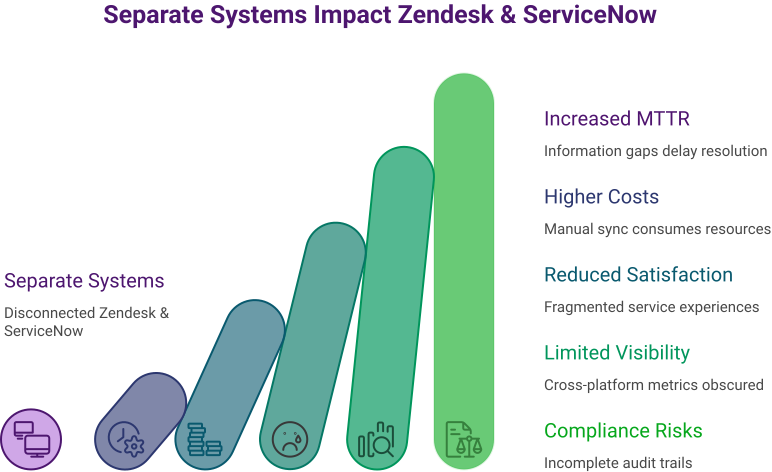
- Increased mean time to resolution (MTTR) due to information gaps
- Higher operational costs from manual data synchronization
- Reduced customer satisfaction from fragmented service experiences
- Limited visibility into cross-platform service metrics
- Compliance risks from incomplete audit trails
Key Benefits of Zendesk Integration with ServiceNow
Implementing a comprehensive Zendesk integration with ServiceNow delivers immediate and long-term benefits that transform IT service delivery. The integration creates a unified view of service operations while preserving the specialized capabilities of each platform.
Organizations experience significant improvements in resolution speed when support agents can access relevant ServiceNow data directly within their Zendesk interface. Similarly, IT operations teams gain valuable context about customer impact when ServiceNow incidents are enriched with Zendesk ticket information.
Enhanced Visibility and Context
Integrated platforms provide complete visibility into service requests regardless of their origin point. Support agents can immediately identify if a customer issue relates to known infrastructure problems, while IT teams understand the customer impact of system outages or performance degradation.
This enhanced context enables more informed decision-making throughout the incident lifecycle. Priority levels can be adjusted based on comprehensive impact assessment, and resources can be allocated more effectively when teams have access to complete information.
Streamlined Workflow Automation
Automation capabilities multiply when platforms work together seamlessly. A Zendesk integrator solution can automatically escalate customer issues to appropriate ServiceNow workflows based on predefined criteria, ensuring that complex technical issues reach the right teams without manual intervention.
Bi-directional updates keep all stakeholders informed throughout the resolution process. When ServiceNow technicians update incident status, customers can receive automatic notifications through Zendesk without requiring manual communication from support agents.
"Companies implementing integrated service management platforms see up to 40% reduction in duplicate tickets and 25% improvement in first-call resolution rates."
— Forrester IT Service Management Research
Common Integration Challenges and Solutions
While the benefits of Zendesk ServiceNow integration are clear, implementation often presents significant technical and organizational challenges. Understanding these obstacles upfront enables teams to develop effective mitigation strategies and ensure successful integration outcomes.
Data mapping represents one of the most complex aspects of platform integration. Zendesk and ServiceNow use different data structures, field definitions, and workflow logic, requiring careful analysis to ensure accurate information transfer between systems.
Technical Architecture Considerations
Both Zendesk and ServiceNow offer robust APIs, but creating effective integrations requires deep understanding of each platform's capabilities and limitations. Rate limiting, authentication requirements, and data format differences must be carefully managed to prevent integration failures.
Real-time synchronization adds another layer of complexity. Organizations must balance the need for immediate updates with system performance requirements, often implementing intelligent queuing and batch processing strategies to maintain optimal operation.
- API rate limiting and throttling management
- Complex field mapping and data transformation requirements
- Authentication and security protocol alignment
- Error handling and recovery mechanisms
- Performance optimization for high-volume environments
Organizational Change Management
Technical integration success depends heavily on effective change management throughout the organization. Teams accustomed to working within isolated platforms must adapt to new workflows and processes that span multiple systems.
Training requirements extend beyond basic system operation to include understanding of integrated workflows, escalation procedures, and cross-platform reporting capabilities. Clear communication about process changes helps ensure adoption and prevents resistance to new operating procedures.
Implementation Strategies for Effective Integration
Successful Zendesk integration with ServiceNow requires a structured approach that addresses both technical and business requirements. Organizations should begin with clear objectives and success metrics while maintaining flexibility to adapt to evolving needs.
A phased implementation approach minimizes risk while allowing teams to validate integration functionality before full deployment. Starting with core use cases provides immediate value while building confidence in the integration platform.
Planning and Assessment Phase
Comprehensive planning begins with detailed assessment of current workflows, data structures, and integration requirements. Teams must identify which tickets require cross-platform visibility and determine appropriate escalation triggers and automation rules.
Stakeholder alignment during the planning phase prevents scope creep and ensures that integration objectives support broader business goals. Clear documentation of requirements, success criteria, and implementation timeline provides a roadmap for successful execution.
Data Mapping and Configuration
Effective data mapping ensures that information transfers accurately between platforms while maintaining data integrity and consistency. This process requires detailed analysis of field relationships, value transformations, and validation rules.
Configuration testing should occur in isolated environments before production deployment. Comprehensive test scenarios should cover normal operations, edge cases, and error conditions to validate integration reliability under various circumstances.
.svg)
Leveraging ZigiOps for Seamless Zendesk ServiceNow Integration
While custom development and point-to-point integrations can connect Zendesk and ServiceNow, these approaches often create maintenance burdens and scalability limitations. Modern Zendesk integrator platforms like ZigiOps provide pre-built connectivity with advanced configuration capabilities.
ZigiOps eliminates the complexity of custom integration development by providing a no-code platform specifically designed for IT operations workflows. The platform includes pre-configured templates for common integration scenarios while offering flexibility for unique organizational requirements.
No-Code Integration Benefits
No-code integration platforms democratize integration capabilities by enabling IT teams to implement and modify integrations without extensive development resources. This approach reduces time-to-value while providing greater control over integration behavior and maintenance.
The visual configuration interface simplifies complex mapping and transformation requirements, making it easier for teams to understand and maintain integration logic. Built-in monitoring and alerting capabilities provide visibility into integration performance and reliability.
Organizations can explore comprehensive ServiceNow integration to Zendesk Support with ZigiOps to understand how pre-built connectors accelerate implementation while ensuring robust functionality.
Advanced Automation Capabilities
ZigiOps extends beyond basic data synchronization to provide intelligent automation that adapts to changing business requirements. The platform can implement complex business rules, conditional routing, and multi-step workflows that span both platforms.
Real-time bi-directional synchronization ensures that updates in either system immediately reflect in the other, maintaining data consistency and providing stakeholders with current information. Advanced filtering and transformation capabilities ensure that only relevant information transfers between systems.
"Integration platforms that provide visual workflow designers see 60% faster implementation times compared to traditional custom development approaches."
— Gartner Integration Platform Research
Best Practices for Ticket Lifecycle Management
Effective Zendesk ServiceNow integration requires careful consideration of ticket lifecycle management across both platforms. Organizations must define clear rules for ticket creation, escalation, updates, and closure to prevent confusion and ensure consistent service delivery.
Establishing ownership models helps prevent tickets from falling through gaps between teams and systems. Clear escalation criteria ensure that issues reach appropriate resolution teams based on complexity, impact, and organizational priorities.
Automated Escalation and Routing
Intelligent routing capabilities analyze incoming tickets and automatically direct them to appropriate teams based on content, priority, and current workload. This automation reduces manual triage work while ensuring that critical issues receive immediate attention.
Escalation triggers should consider both time-based and condition-based criteria. Time-based escalations prevent tickets from aging without attention, while condition-based escalations respond to specific events or status changes that require immediate action.
- Define clear ownership models for cross-platform tickets
- Implement intelligent routing based on ticket content and priority
- Establish escalation triggers for time-sensitive issues
- Create unified SLA management across both platforms
- Develop comprehensive status update procedures
SLA Management and Reporting
Integrated SLA management ensures consistent service level commitments regardless of which platform initiates the ticket. Organizations must align SLA definitions between platforms and implement monitoring that tracks performance across the entire service delivery chain.
Unified reporting capabilities provide comprehensive insights into service performance, enabling teams to identify bottlenecks, optimize processes, and demonstrate value to business stakeholders. Cross-platform analytics reveal patterns and trends that single-system reporting cannot detect.
Security and Compliance Considerations
Security requirements for Zendesk integration with ServiceNow must address data protection, access control, and compliance obligations. Organizations handling sensitive information must ensure that integration platforms maintain appropriate security controls throughout the data transfer process.
Encryption requirements apply to data both in transit and at rest. Integration platforms should support modern encryption standards and provide audit trails that document all data access and modification activities.
Access Control and Authentication
Role-based access control ensures that users can only access information appropriate to their job responsibilities, even when data spans multiple platforms. Integration configurations should respect existing security boundaries while enabling necessary information sharing.
Single sign-on capabilities streamline user experience while maintaining security requirements. Users should not need separate authentication for integrated workflows, but access controls must remain enforced throughout cross-platform operations.
Audit and Compliance Requirements
Comprehensive audit trails document all integration activities, providing the visibility required for compliance reporting and security analysis. These logs should capture data access, modifications, and system interactions with sufficient detail for forensic analysis.
Data retention policies must align with organizational and regulatory requirements while considering the distributed nature of integrated platforms. Clear procedures for data purging and archiving prevent compliance violations while managing storage costs.
"Organizations with integrated audit capabilities reduce compliance reporting time by an average of 45% while improving audit trail completeness."
— TechTarget IT Compliance Research
.svg)
Measuring Integration Success and ROI
Quantifying the success of Zendesk ServiceNow integration requires establishing baseline metrics before implementation and tracking improvement over time. Key performance indicators should align with business objectives while providing actionable insights for continuous optimization.
Resolution time metrics provide immediate feedback on integration effectiveness. Organizations typically see significant improvements in mean time to resolution when agents have access to comprehensive information from both platforms.
Key Performance Indicators
Customer satisfaction scores often improve following successful integration implementation as customers experience faster resolution times and more informed support interactions. First-call resolution rates typically increase when agents have access to complete customer and infrastructure information.
Operational efficiency metrics include ticket volume, agent productivity, and resource utilization. These indicators help quantify the business value of integration investments and identify opportunities for further optimization.
- Mean time to resolution (MTTR) improvements
- First-call resolution rate increases
- Customer satisfaction score enhancements
- Agent productivity and utilization metrics
- Reduction in duplicate ticket creation
- Cross-platform workflow automation percentage
Long-term Value Realization
Beyond immediate operational improvements, successful integration enables strategic capabilities that deliver long-term value. Predictive analytics become more effective when drawing from comprehensive cross-platform datasets.
The foundation for advanced automation expands when platforms work together seamlessly. Organizations can implement sophisticated workflow orchestration that spans multiple systems, enabling more complex and valuable business processes.
Advanced Integration Scenarios and Use Cases
As organizations mature their Zendesk integrator capabilities, they often identify advanced use cases that deliver additional business value. These scenarios typically involve multi-step workflows, complex data transformations, and integration with additional platforms beyond the core Zendesk-ServiceNow connection.
Asset management integration enables support teams to access comprehensive configuration information when working with customer issues. This context helps agents provide more accurate troubleshooting guidance and identify potential proactive maintenance opportunities.
Multi-Platform Ecosystem Integration
Modern IT environments often require integration beyond just two platforms. Organizations may need to connect monitoring tools, asset management systems, and other specialized applications to create comprehensive service management ecosystems.
The ZigiWave integrations platform supports multiple simultaneous connections, enabling organizations to build complex integration networks that span their entire IT infrastructure. This capability eliminates the need for multiple point-to-point integrations that become difficult to manage and maintain.
Proactive Service Management
Advanced integrations enable proactive service management by correlating data across multiple systems to identify potential issues before they impact customers. Monitoring data from infrastructure systems can automatically create ServiceNow incidents while simultaneously updating related Zendesk tickets.
This proactive approach shifts organizations from reactive support models to preventive service delivery, improving customer satisfaction while reducing overall support workload.
Future-Proofing Your Integration Strategy
Technology platforms continue to evolve rapidly, and successful Zendesk ServiceNow integration strategies must accommodate future changes and requirements. Organizations should select integration approaches that provide flexibility for new features, additional platforms, and changing business needs.
API-first integration platforms offer the greatest long-term flexibility by adapting to platform updates and new feature releases without requiring complete rebuilds. This approach ensures that integration investments continue to deliver value as underlying platforms evolve.
Scalability and Performance Planning
Integration requirements typically grow over time as organizations identify new use cases and expand their service management capabilities. Architecture decisions made during initial implementation should accommodate increased data volumes, additional workflows, and expanded user bases.
Performance monitoring becomes increasingly important as integration complexity grows. Organizations should establish baseline performance metrics and implement proactive monitoring to identify potential bottlenecks before they impact service delivery.
Technology Evolution and Adaptation
Both Zendesk and ServiceNow regularly introduce new features and capabilities that can enhance integrated workflows. Organizations should establish processes for evaluating and implementing new functionality while maintaining integration stability.
Cloud-native integration platforms provide natural scalability and typically offer automatic updates that incorporate new platform features. This approach reduces the maintenance burden while ensuring access to latest capabilities.
Conclusion
Implementing effective Zendesk ServiceNow integration transforms IT service delivery by eliminating ticket silos and enabling seamless collaboration between customer support and internal IT operations teams. Organizations that successfully bridge these platforms experience significant improvements in resolution times, customer satisfaction, and operational efficiency.
The key to integration success lies in comprehensive planning, appropriate technology selection, and ongoing optimization based on performance metrics and user feedback. Modern no-code integration platforms like ZigiOps provide the flexibility and functionality needed to implement sophisticated integrations without extensive development resources.
As IT environments continue to grow in complexity, the ability to create unified service management experiences becomes increasingly critical for competitive advantage. Organizations that invest in robust integration capabilities today position themselves for success in an increasingly connected and automated future.
The transformation from siloed operations to integrated service delivery requires commitment and strategic thinking, but the benefits extend far beyond operational efficiency. Integrated platforms enable new levels of service quality, customer satisfaction, and business agility that drive meaningful competitive advantage in today's digital economy.