Automated vs. Manual Integration: The Enterprise Guide
Automated vs manual integration: efficiency, cost, and scalability
The debate between automated vs manual integration has become increasingly critical as enterprise IT environments grow more complex. With organizations managing dozens of disparate systems, applications, and data sources, the choice between automation and manual processes can significantly impact operational efficiency, cost management, and scalability.
Modern IT leaders face mounting pressure to streamline operations while maintaining system reliability and data integrity. The decision between automated vs manual integration approaches directly influences an organization's ability to respond to business needs, manage resources effectively, and maintain competitive advantage in an increasingly digital landscape.
This comprehensive guide examines the nuanced considerations that IT managers, system administrators, and CTOs must evaluate when determining the optimal integration strategy for their enterprise stack. From immediate implementation costs to long-term scalability implications, understanding these factors is essential for making informed decisions that align with organizational objectives.
Understanding the Fundamentals of Automated vs Manual Integration
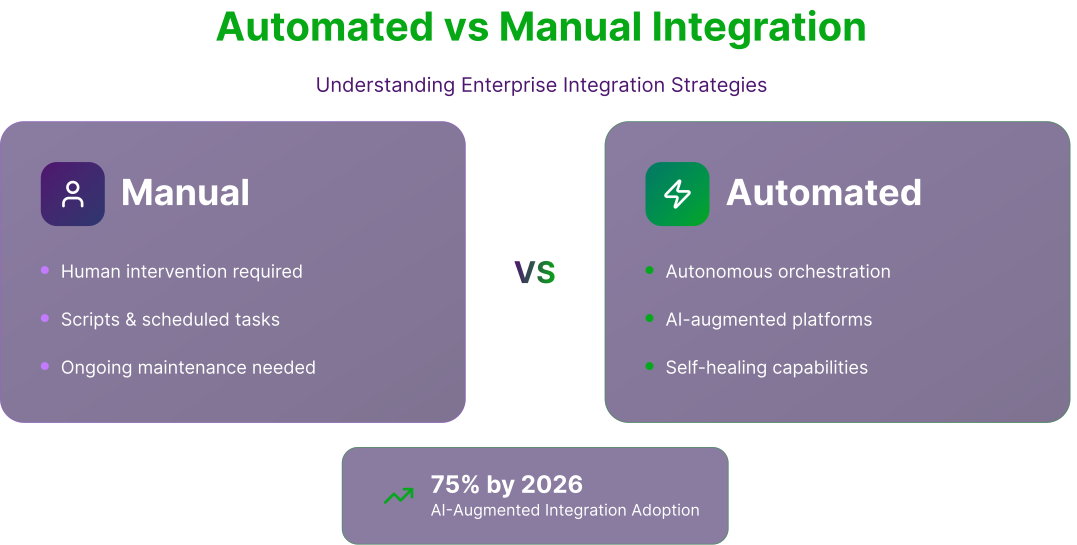
The distinction between automated vs manual integration lies in how data flows, processes execute, and systems communicate within your enterprise environment. Manual integration typically involves human intervention at multiple stages, from data extraction and transformation to loading and validation processes.
Manual integration approaches often rely on scripts, scheduled tasks, or human operators to move data between systems. These methods can provide granular control and flexibility but require ongoing maintenance and supervision. Organizations frequently start with manual processes when dealing with simple integrations or proof-of-concept implementations.
Automated integration, conversely, leverages sophisticated platforms and tools to orchestrate data flows without human intervention. These systems can handle complex transformations, error handling, and monitoring autonomously. Modern application integration platforms offer comprehensive automation capabilities that extend far beyond basic data movement.
The evolution toward IT integration automation 2026 trends indicates a significant shift in how enterprises approach system connectivity. Organizations are increasingly recognizing that strategic integration decisions made today will determine their operational capabilities and competitive positioning in the coming years.
"By 2026, 75% of enterprise applications will use AI-augmented integration capabilities, up from less than 15% in 2023."
— Gartner Research
Core Components of Integration Strategies
Successful integration strategies encompass multiple technical and operational components that must work harmoniously. Data mapping and transformation capabilities form the foundation of any integration approach, whether automated or manual. These processes ensure that information flowing between systems maintains consistency, accuracy, and usability across different platforms and formats.
Error handling and monitoring mechanisms represent another critical component that distinguishes mature integration implementations from basic connectivity solutions. Automated systems excel in this area by providing real-time monitoring, predictive error detection, and self-healing capabilities that minimize system downtime and data loss.
Security and compliance considerations have become increasingly important as organizations face stricter regulatory requirements and sophisticated security threats. Integration approaches must incorporate robust authentication, encryption, and audit trail capabilities to protect sensitive data and ensure regulatory compliance across all connected systems.
The Case for Manual Integration in Enterprise Environments
Despite the growing trend toward automation, manual integration approaches retain significant value in specific enterprise scenarios. Organizations with highly specialized workflows, stringent compliance requirements, or unique data transformation needs often find manual processes provide the precision and control necessary for mission-critical operations.
Manual integration excels in environments where flexibility and adaptability take precedence over processing speed or volume. When dealing with frequently changing business rules, experimental data sources, or one-time migration projects, the ability to modify processes quickly without extensive reconfiguration becomes invaluable.
Cost considerations also play a crucial role in the automated vs manual integration decision. For organizations with limited integration requirements or budget constraints, manual approaches can provide immediate functionality without the substantial upfront investment required for comprehensive automation platforms.
Advantages of Manual Integration Approaches
Manual integration processes offer distinct advantages in specific operational contexts. Direct human oversight ensures that complex business logic and edge cases receive appropriate attention, particularly when dealing with sensitive data or critical business processes that require careful validation and verification.
The following benefits make manual integration attractive for certain enterprise scenarios:
• Lower initial implementation costs and reduced infrastructure requirements
• Greater flexibility in handling unique or changing business requirements
• Enhanced control over data validation and quality assurance processes
• Simplified troubleshooting and debugging when issues arise
• Reduced dependency on specialized technical expertise and vendor support
• Easier compliance demonstration for heavily regulated industries
• Ability to implement quick fixes and temporary solutions without system modifications
Manual processes also provide valuable learning opportunities for IT teams to understand data relationships and business logic before implementing automated solutions. This knowledge becomes crucial when designing robust automated systems that can handle the full spectrum of operational scenarios.
Limitations and Challenges of Manual Integration
While manual integration offers certain advantages, organizations must acknowledge significant limitations that can impact long-term operational efficiency. Scalability represents the most substantial challenge, as manual processes become increasingly difficult to manage as data volumes and integration complexity grow.
Human error risks increase substantially with manual processes, particularly during repetitive tasks or complex data transformations. These errors can propagate throughout connected systems, creating data inconsistencies that may require extensive remediation efforts and potentially impact business operations.
Resource allocation inefficiencies emerge as skilled technical staff spend increasing amounts of time on routine integration tasks rather than strategic initiatives. This opportunity cost becomes more pronounced as organizations seek to leverage their technical talent for innovation and competitive advantage.
The Power of ITSM Automation Tools in Modern Enterprises
ITSM automation tools have revolutionized how organizations approach service management and system integration. These platforms provide sophisticated capabilities that extend far beyond basic connectivity, offering comprehensive workflow orchestration, incident management, and service delivery optimization.
Modern ITSM automation tools integrate seamlessly with existing enterprise systems while providing advanced features such as AI-powered decision making, predictive analytics, and intelligent routing. These capabilities enable organizations to create responsive, self-healing IT environments that can adapt to changing conditions without human intervention.
The evolution of ITSM automation tools reflects the broader trend toward IT integration automation 2026, where intelligent systems will increasingly manage complex operational scenarios independently. Organizations investing in these capabilities today position themselves to leverage advanced automation features as they become available.
"Organizations that implement comprehensive ITSM automation see an average 40% reduction in incident resolution time and 60% improvement in first-call resolution rates."
— Forrester Research
Key Capabilities of Advanced ITSM Automation Tools
Contemporary ITSM automation tools offer comprehensive feature sets designed to address the full spectrum of IT service management requirements. Incident management automation capabilities can automatically categorize, prioritize, and route tickets based on predefined criteria and historical patterns, significantly reducing response times and improving service quality.
Change management automation provides controlled, traceable processes for implementing system modifications while maintaining security and compliance standards. These tools can automatically validate changes, coordinate approvals, and execute rollback procedures when necessary, reducing the risk associated with system modifications.
Asset and configuration management automation ensures accurate, up-to-date information about enterprise resources and their relationships. This capability becomes increasingly important as organizations manage hybrid cloud environments and complex infrastructure deployments that change frequently.
Integration Capabilities of ITSM Automation Tools
Leading ITSM automation tools provide robust integration capabilities that facilitate seamless connectivity with existing enterprise systems. These platforms typically offer pre-built connectors for popular applications, APIs for custom integrations, and workflow engines that can orchestrate complex multi-system processes.
Real-time synchronization capabilities ensure that data remains consistent across integrated systems while providing audit trails and monitoring capabilities that support compliance requirements. Advanced platforms can handle bidirectional data flows, conflict resolution, and data transformation requirements without custom development.
The ServiceNow integration capabilities exemplify how modern platforms can connect diverse enterprise systems while maintaining data integrity and operational efficiency. These integrations enable organizations to leverage existing investments while extending functionality across their technology stack.
Key Factors in Choosing Between Automated vs Manual Integration
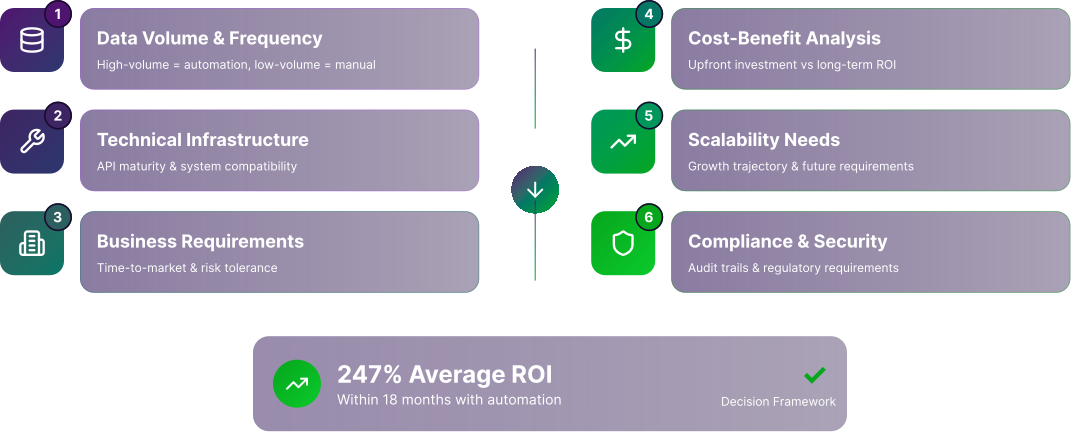
The decision between automated vs manual integration requires careful evaluation of multiple factors that impact both immediate implementation success and long-term operational effectiveness. Organizations must assess their current state, future requirements, and available resources to make informed decisions that align with strategic objectives.
Data volume and frequency represent primary considerations in integration approach selection. High-volume, frequent data exchanges typically justify automation investments, while low-volume or occasional transfers may be more cost-effective to handle manually. Understanding current and projected data flows helps organizations make appropriate sizing decisions.
Complexity assessment involves evaluating the sophistication of required data transformations, business logic implementation, and error handling requirements. Simple data movements may not require automation, while complex scenarios involving multiple systems and intricate business rules often benefit from automated approaches.
Technical Infrastructure Considerations
Existing technical infrastructure capabilities significantly influence the automated vs manual integration decision. Organizations with mature API management, monitoring, and security frameworks are better positioned to implement automated solutions effectively. Conversely, organizations with limited infrastructure may need to address foundational requirements before pursuing comprehensive automation.
System compatibility and standardization levels affect integration complexity and approach selection. Environments with standardized interfaces and data formats typically support automation more easily, while heterogeneous environments with legacy systems may require manual processes to handle compatibility challenges.
The following technical factors should guide integration approach decisions:
• Current API availability and documentation quality across target systems
• Data format standardization and transformation requirements
• Network reliability and bandwidth availability for real-time integration
• Security infrastructure capabilities and compliance requirements
• Monitoring and alerting system maturity and coverage
• Disaster recovery and backup capabilities for integrated systems
• Technical expertise availability for implementation and maintenance
Business and Operational Factors
Business requirements and operational constraints play equally important roles in integration approach selection. Time-to-market pressures may favor manual implementations that can be deployed quickly, while long-term operational efficiency goals support automation investments that provide sustained benefits.
Risk tolerance levels vary significantly across organizations and influence integration strategy decisions. Conservative organizations may prefer manual approaches that provide greater control and predictability, while innovative organizations may embrace automation to gain competitive advantages through operational efficiency.
Budget considerations encompass both initial implementation costs and ongoing operational expenses. Manual approaches typically require lower upfront investments but higher ongoing labor costs, while automated solutions involve substantial initial investments that generate long-term savings through operational efficiency.
Cost-Benefit Analysis: Automated vs Manual Integration
Comprehensive cost-benefit analysis provides the foundation for making informed decisions about automated vs manual integration approaches. Organizations must evaluate both direct and indirect costs associated with each approach while considering the time value of benefits and risks associated with different implementation strategies.
Direct costs for manual integration include labor expenses, infrastructure requirements, and ongoing maintenance activities. While initial implementation costs may be lower, manual approaches often incur higher long-term operational expenses due to labor intensity and scaling challenges as integration requirements grow.
Automated integration involves higher upfront investments in platforms, licenses, and implementation services but typically generates significant operational savings over time. The break-even point depends on integration complexity, data volumes, and the organization's labor costs for technical resources.
"Companies implementing automated integration platforms report an average ROI of 247% within 18 months, primarily driven by reduced operational costs and improved system reliability."
— Forrester Total Economic Impact Study
Hidden Costs and Considerations
Hidden costs significantly impact the total cost of ownership for both automated and manual integration approaches. Manual processes often incur substantial opportunity costs as skilled technical resources spend time on routine tasks rather than strategic initiatives that drive business value and competitive advantage.
Error remediation costs can be substantial for manual processes, particularly when data inconsistencies propagate across multiple systems before detection. Automated systems typically provide faster error detection and resolution capabilities that minimize the business impact of integration failures.
Compliance and audit costs vary significantly between approaches. Manual processes may require extensive documentation and validation efforts to demonstrate regulatory compliance, while automated systems often provide built-in audit trails and compliance reporting capabilities that reduce administrative burden.
Long-term Value Considerations
Long-term value analysis extends beyond immediate cost considerations to include strategic capabilities and competitive advantages. Organizations that invest in automation platforms often gain capabilities that enable new business models, improved customer experiences, and operational insights that drive competitive differentiation.
Scalability benefits become increasingly important as organizations grow and their integration requirements expand. Automated platforms typically scale more efficiently than manual processes, providing cost advantages that compound over time as data volumes and system complexity increase.
Innovation enablement represents a critical long-term benefit of automation platforms. Organizations with robust integration capabilities can more easily adopt new technologies, implement innovative solutions, and respond to changing market conditions compared to those constrained by manual processes.
Implementing ITSM Automation Tools: Best Practices and Strategies
Successful implementation of ITSM automation tools requires careful planning, phased execution, and ongoing optimization to realize maximum value from automation investments. Organizations must develop comprehensive implementation strategies that address technical requirements, organizational change management, and performance measurement objectives.
Phased implementation approaches typically yield better results than comprehensive "big bang" deployments. Starting with high-impact, low-complexity integrations allows organizations to build expertise and confidence while demonstrating value to stakeholders. Successful initial implementations create momentum for broader automation initiatives across the enterprise.
Change management considerations are particularly important when implementing ITSM automation tools that modify existing workflows and processes. Technical teams may resist automation that changes familiar procedures, making stakeholder engagement and training critical success factors for automation initiatives.
Platform Selection and Evaluation Criteria
Platform selection significantly impacts implementation success and long-term operational effectiveness. Organizations should evaluate platforms based on integration capabilities, scalability potential, vendor support quality, and alignment with existing technical infrastructure and strategic objectives.
The requirements and pitfalls of Jira integration demonstrate the importance of thorough platform evaluation and planning. Understanding common implementation challenges enables organizations to avoid costly mistakes and ensure successful automation deployments.
Evaluation criteria should encompass both technical and business considerations:
• Pre-built connector availability for existing enterprise systems
• Customization capabilities and development requirements
• Scalability and performance characteristics under expected loads
• Security features and compliance certification status
• Vendor stability, support quality, and roadmap alignment
• Total cost of ownership including licenses, implementation, and maintenance
• User interface quality and ease of use for administrators and end users
Implementation Planning and Execution
Comprehensive implementation planning addresses technical preparation, resource allocation, timeline management, and success criteria definition. Organizations should establish clear objectives, metrics, and governance structures before beginning implementation activities to ensure alignment and accountability throughout the project lifecycle.
Technical preparation involves infrastructure assessment, system integration planning, and data migration strategy development. Understanding existing system capabilities and limitations enables more accurate project scoping and risk mitigation planning for automation implementations.
Resource allocation planning should account for both internal team requirements and external expertise needs. Many organizations benefit from partnering with experienced implementation consultants who can provide specialized knowledge and accelerate time-to-value for automation initiatives.
Future Trends: IT Integration Automation 2026 and Beyond
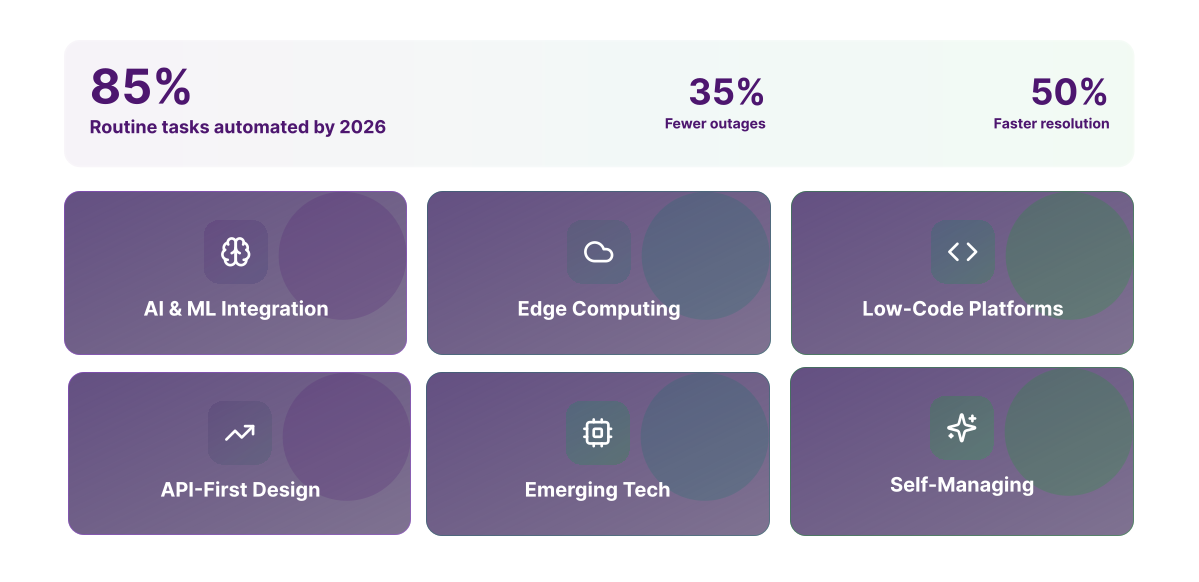
The landscape of IT integration automation 2026 will be characterized by artificial intelligence, machine learning, and autonomous system management capabilities that far exceed today's automation platforms. Organizations making integration decisions today must consider how emerging technologies will impact their future operational capabilities and competitive positioning.
Artificial intelligence integration will enable systems to make intelligent decisions about data routing, transformation, and error handling without human intervention. These capabilities will blur the traditional distinction between automated vs manual integration as systems become increasingly autonomous and self-managing.
Edge computing and distributed system architectures will create new integration challenges and opportunities. Organizations will need platforms capable of managing complex, distributed integration scenarios while maintaining security, performance, and reliability across diverse infrastructure environments.
"By 2026, intelligent automation will handle 85% of routine IT integration tasks, allowing technical teams to focus on strategic innovation and complex problem-solving activities."
— Gartner Automation Predictions
Emerging Technology Integration
Emerging technologies such as blockchain, Internet of Things (IoT), and quantum computing will create new integration requirements that traditional approaches cannot address effectively. Organizations must select platforms and strategies that can adapt to these evolving technology landscapes while maintaining operational stability.
API-first architectures and microservices deployments will become increasingly common, requiring integration platforms that can manage distributed, event-driven architectures efficiently. The shift toward cloud-native applications will drive demand for integration solutions that can operate seamlessly across hybrid and multi-cloud environments.
Low-code and no-code integration platforms will democratize automation capabilities, enabling business users to create and modify integrations without extensive technical expertise. This trend will accelerate automation adoption while creating new governance and security challenges that organizations must address proactively.
Preparing for Future Integration Requirements
Organizations should develop integration strategies that provide flexibility and adaptability for future technology adoption. Selecting platforms with strong API ecosystems, extensible architectures, and active developer communities positions organizations to leverage emerging capabilities as they become available.
Investment in technical skills and organizational capabilities becomes increasingly important as automation platforms become more sophisticated. Organizations should develop internal expertise in automation platform management, integration design, and performance optimization to maximize value from their investments.
The advanced scripting capabilities for Jira-ServiceNow integration illustrate how modern platforms provide extensibility and customization options that enable organizations to adapt to changing requirements while maintaining operational efficiency.
Real-World Implementation: ZigiOps Case Studies and Success Stories
Real-world implementations provide valuable insights into how organizations successfully navigate the automated vs manual integration decision process. ZigiOps deployments across diverse industries demonstrate how no-code integration platforms can address complex enterprise requirements while providing flexibility and scalability benefits.
Enterprise organizations have successfully leveraged ZigiOps to eliminate manual processes that previously required significant technical resources and time investment. These implementations showcase how modern integration platforms can provide immediate operational benefits while establishing foundations for future automation expansion.
The versatility of no-code platforms enables organizations to address both simple connectivity requirements and complex workflow automation scenarios. This flexibility proves particularly valuable for organizations with diverse integration needs that span multiple departments and business processes.
Measurable Business Impact
Organizations implementing automated integration solutions report significant improvements in operational efficiency, data accuracy, and resource utilization. These benefits typically emerge within the first few months of deployment and continue to grow as organizations optimize their integration workflows and expand automation coverage.
Quantifiable improvements include reduced manual effort, faster incident resolution times, improved data consistency across systems, and enhanced reporting capabilities that support better decision-making. These operational benefits translate directly into cost savings and improved business outcomes for implementing organizations.
The comprehensive integration capabilities available through modern platforms enable organizations to connect virtually any combination of enterprise systems while maintaining security, reliability, and performance requirements essential for mission-critical operations.
Lessons Learned and Best Practices
Successful implementations reveal several common success factors that organizations should consider when planning their integration strategies. Early stakeholder engagement, comprehensive requirements gathering, and phased implementation approaches consistently produce better outcomes than rushed or comprehensive deployment strategies.
Technical preparation and infrastructure readiness significantly impact implementation success rates. Organizations with mature API management, security frameworks, and monitoring capabilities typically achieve faster deployment and better long-term operational results than those requiring extensive infrastructure development.
Ongoing optimization and enhancement activities prove essential for maximizing value from integration investments. Organizations that treat integration as an evolving capability rather than a one-time implementation consistently achieve better long-term results and return on investment from their automation initiatives.
"Organizations using integrated ITSM platforms report 35% fewer system outages and 50% faster problem resolution compared to those using disparate, manually connected tools."
— TechTarget IT Operations Research
Making the Strategic Decision: Framework for Success
Developing a strategic framework for the automated vs manual integration decision requires systematic evaluation of organizational capabilities, requirements, and objectives. This framework should address immediate needs while positioning the organization for future growth and technology evolution.
Assessment should begin with current state analysis that documents existing integration approaches, pain points, resource utilization, and performance metrics. Understanding the baseline enables organizations to set realistic improvement targets and measure the impact of integration strategy changes.
Future state visioning involves defining desired operational capabilities, scalability requirements, and strategic objectives that integration investments should support. This vision guides platform selection and implementation planning while ensuring alignment with broader organizational strategies.
Decision Matrix and Evaluation Criteria
A structured decision matrix helps organizations evaluate integration approaches objectively across multiple criteria. This matrix should weight factors according to organizational priorities while providing clear comparisons between automated and manual approaches for specific use cases.
Critical evaluation criteria include implementation complexity, ongoing maintenance requirements, scalability potential, cost implications, and strategic alignment. Organizations should also consider risk tolerance, resource availability, and timeline constraints when evaluating integration options.
The decision framework should be flexible enough to accommodate different conclusions for various integration scenarios within the same organization. Some integrations may warrant automation while others remain more appropriate for manual approaches based on specific requirements and constraints.
Implementation Roadmap Development
Successful integration strategies require detailed implementation roadmaps that sequence activities logically while managing risk and resource requirements effectively. These roadmaps should identify quick wins that demonstrate value while building toward more complex automation scenarios over time.
Phasing strategies should consider system dependencies, resource availability, and business impact priorities. Starting with high-value, low-risk integrations enables organizations to build confidence and expertise while generating stakeholder support for broader automation initiatives.
Governance structures and success metrics must be established early in the implementation process to ensure accountability and enable continuous improvement. Regular assessment and optimization activities help organizations maximize value from their integration investments while adapting to changing requirements.
Conclusion: Charting Your Integration Future
The choice between automated vs manual integration represents a strategic decision that will impact your organization's operational capabilities, competitive positioning, and ability to adapt to future technology evolution. While manual approaches offer control and flexibility for specific scenarios, the trend toward IT integration automation 2026 makes clear that organizations must develop comprehensive automation strategies to remain competitive.
ITSM automation tools have evolved to provide sophisticated capabilities that address the full spectrum of enterprise integration requirements while offering the flexibility and scalability necessary for future growth. Organizations that invest in these capabilities today position themselves to leverage advanced automation features as they become available while gaining immediate operational benefits.
The decision framework presented in this guide provides the structure necessary for making informed integration choices that align with organizational objectives and constraints. By carefully evaluating current state requirements, future state vision, and available options, organizations can develop integration strategies that support both immediate needs and long-term success in an increasingly automated operational environment.